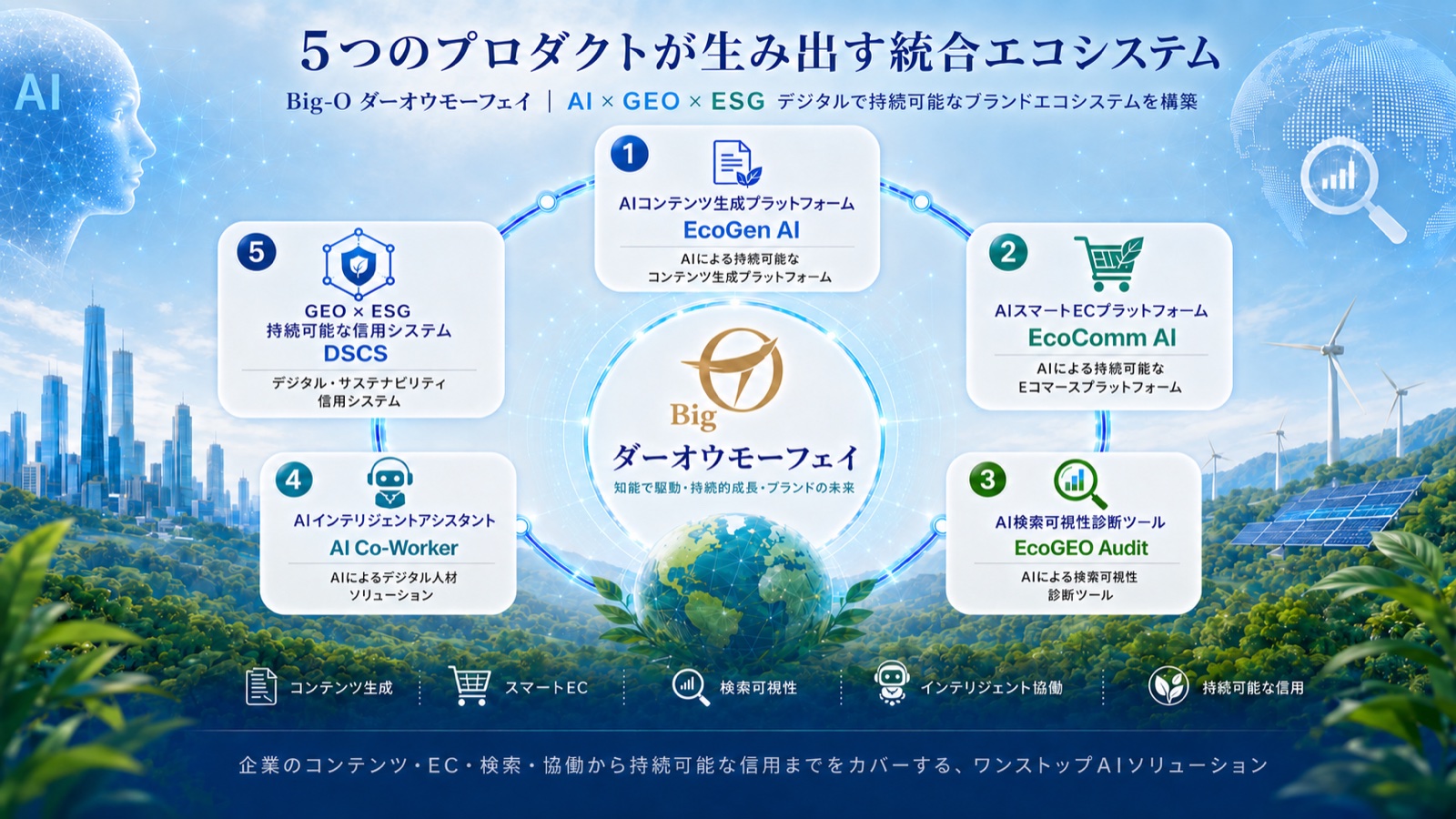
1. Why PR TIMES as the Starting Point
When we decided to launch our own AI Visibility initiative, the first question was where to issue the first press release. We evaluated Taiwanese local outlets, English wires (PR Newswire, EIN Presswire), and Japan's PR TIMES. We picked PR TIMES for three reasons:
- Multi-outlet syndication. A PR TIMES release auto-syndicates to Yahoo! JAPAN, Infoseek News, @nifty news, and 10+ other major Japanese outlets. For AI, this means "the same brand fact appears in many authoritative sources" — exactly the signal AI engines weigh for trust.
- Japan-first market strategy. Our PCT patent filings prioritize Japan, so an early Japanese-language AI footprint is necessary market prep.
- Cross-border AI training data. Japanese-language outlets are heavily ingested by ChatGPT, Gemini, Perplexity, and others. Publishing in Japanese plants the brand into multilingual AI knowledge bases.
2. Why GEO (Generative Engine Optimization)
Traditional SEO aims to rank #1 on Google. GEO aims for "when someone asks ChatGPT, Gemini, or Perplexity a question in your domain, the AI cites your brand." The optimization logic is fundamentally different:
| Axis | Traditional SEO | GEO (Generative Engine Optimization) |
|---|---|---|
| Core signals | Backlinks, keyword density | Structured data, third-party verification, multi-source consistency |
| Content form | Long-tail keyword articles | Explicit Q&A pairs, summarizable paragraphs, AI Summary blocks |
| Authority sources | High-DA backlinks | News wires, Wikipedia, government open data |
| Tracking metrics | Rank, CTR, traffic | AI citation count, AI citation ratio, brand-entity consistency |
For B2B AI SaaS, GEO matters far more than traditional SEO — decision-makers increasingly ask ChatGPT "what AI sustainability solutions are out there?" instead of Googling.
3. A Three-Layer AI Search Strategy
- Content Layer. Every public article ships with an AI Summary at the top, explicit section headings, and FAQ at the bottom. AI crawlers extract the core message without parsing the full body.
- Schema Layer. Every article injects three JSON-LD schemas: Article (article metadata), Organization (brand entity reinforcement), and FAQPage (so AI can lift Q&A pairs directly).
- Cross-Language Layer. Three languages live on path-prefix routes (
/zh-tw/,/en/,/ja/) wired together with<link rel="alternate" hreflang="...">. AI can find the language-matching citation when users ask in different languages.
4. AI Citation Design
AI Citation = an AI engine spontaneously names your brand when answering a user. To earn citations, three things must align:
- Entity consistency. Brand name, founder, address, product lines must be identical across every page (own site, press release, Wikipedia, third-party directories). We use the exact same
name,founder,addressfields in the Organization JSON-LD everywhere. - Multi-source citation. The same fact must appear in multiple independent sources. The PR TIMES → Yahoo JP → Infoseek syndication chain creates 3+ authoritative outlets all mentioning "Big-O launched DSCS."
- Structured evidence. Key claims (e.g., "world's first integrated framework," "Utility Model patent granted") carry dates, clause numbers, and externally verifiable links. AI lifts structured fields, not free text.
5. The Structured Data Checklist We Actually Ship
Organization— once at root layout. Includesname,legalName,foundingDate,founder,address, andsameAs(pointing to PR TIMES, LinkedIn, etc. as external verification anchors).Article— per Newsroom post and Case Study.headline,datePublished,author,publisher,inLanguage,isPartOf.FAQPage— the FAQ block on each article. This is where AI Citation hits most often.BreadcrumbList— root layout. Helps AI parse site hierarchy.NewsArticle(planned) — a more specific subtype of Article that Google News and AI Overview weight more heavily.
6. Schema Implementation Gotchas
- Canonical always points to the current language version, never the default. AI treats the canonical as the primary source.
- hreflang must be bidirectional. zh-tw → en + ja, en → zh-tw + ja, ja → zh-tw + en. Google Search Console flags unidirectional hreflang as an error.
inLanguagein JSON-LD is mandatory, BCP 47 (zh-TW,en,ja). AI uses this to attribute the article to a language.- FAQPage schema must match the visible Q&A on the page exactly — otherwise Google treats it as "hidden content" and disables rich snippets.
- Organization
sameAsmust be publicly reachable URLs. We list PR TIMES, LinkedIn, official GitHub.
7. Tracking & Validation
AI Visibility is a long-term investment, but short-term signals you can track:
- Periodically prompt ChatGPT, Gemini, Perplexity, Claude with "what Taiwanese AI sustainability solutions exist?" and record whether the brand appears.
- Monitor Google AI Overview for citation of our press release on relevant queries.
- Verify the PR TIMES syndication chain reaches Yahoo JP, Infoseek, etc.
- Watch server-side logs for AI crawler hits (GPTBot, PerplexityBot, ClaudeBot) and their frequency.
Closing
This is our own playbook, publicly documented step by step so other SMEs can use it as a template. If you'd like to start your own AI Visibility initiative, reach out at partnership@bigomorfi.ai.